
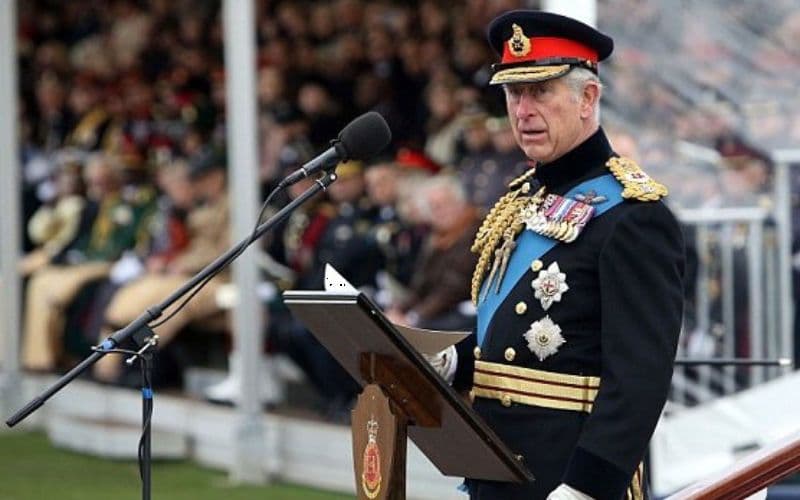
The Sovereign's Parade
The Sovereign's Parade is the graduation and commissioning parade held at the Royal Military Academy Sandhurst (RMAS) for officer cadets who have successfully completed their training.
It is one of the most important ceremonial events in the British Army
During the parade officer cadets march on parade before senior military leaders, guests, and family members.
Graduating cadets receive their commissions as officers in the British Army or, in many cases, the armed forces of allied nations.
The parade is traditionally reviewed by the reigning monarch (the Sovereign) or an official representative acting on the monarch's behalf.
Awards are presented, including the prestigious Sword of Honour, which is awarded to the most outstanding officer cadet. (This is a long-standing Sandhurst tradition.)
The name "Sovereign's Parade" reflects the fact that newly commissioned officers are ultimately commissioned in the name of the Sovereign. The first official Sovereign's Parade at Sandhurst took place on 20 October 1948.
If you're attending one, expect a highly formal military ceremony with marching, military bands, inspections, speeches, and the iconic march up the steps of the Old College after the parade. It is a significant milestone for cadets and their families.
Why is a horse ridden up the steps at the end of the Sovereign's Parade?
The horse ridden up the steps at the end of the Sandhurst Sovereign's Parade is part of a unique tradition involving the Academy Sergeant Major (ASM), who is mounted during the parade.
The reason the horse goes up the famous steps of the Old College is largely ceremonial and symbolic. After the parade concludes and the newly commissioned officers march away, the mounted ASM rides up the steps and into the Old College courtyard, demonstrating the horse's training and marking the conclusion of the ceremony. It has become one of the most memorable visual moments of a Sandhurst graduation.
The tradition is often associated with the Academy's emphasis on leadership, discipline, military heritage, and horsemanship. While many military ceremonies involve mounted soldiers, Sandhurst is unusual in having a horse negotiate a substantial flight of stone steps, which requires extensive training and a very calm, experienced horse.
The practice dates back many decades, although the sources I found describe the parade itself more than the origin of the horse tradition, so I can't verify an exact historical reason for when or why the step-climbing first began. The horse ascending the steps is now regarded as a distinctive Sandhurst ceremonial custom.
If you're attending a parade, it's worth positioning yourself where you can see the Old College steps afterward, because many visitors consider the mounted ascent one of the highlights of the day.